Content Analysis vs. Thematic Analysis: A Comprehensive Guide
Uncover the differences between content analysis and thematic analysis, learn which method is right for your research, and discover powerful tools to streamline your analysis.
Content analysis counts word frequency and surface-level patterns quantitatively, while thematic analysis interprets underlying meanings and themes qualitatively.
Content analysis works best for hypothesis testing with structured data, while thematic analysis excels at exploring complex phenomena in unstructured feedback.
Thematic is AI-powered qualitative analysis software that automates theme identification in large datasets while giving researchers transparent control to edit and validate themes.
Unlike rigid content analysis or black-box AI, Thematic combines automated coding with human-in-the-loop control for research-grade accuracy at enterprise scale.
For enterprise CX and Insights teams managing thousands of qualitative comments, Thematic maintains the interpretive depth traditional thematic analysis requires with transparent, auditable results.
On the surface, content analysis and thematic analysis sound the same. They both use terms like "coding" and "themes," and both share the goal of extracting meaning.
For many, content analysis and thematic analysis feel interchangeable. However, they're different in important ways.
While they both start with qualitative data, these methods differ in how they analyze data and arrive at results. Content analysis focuses on counting frequency, while thematic analysis interprets underlying meaning.
For enterprise research and Insights teams managing large-scale qualitative data, understanding this distinction matters. Tools like Thematic bring research-grade thematic analysis to enterprise datasets, giving researchers transparent control while AI handles the heavy lifting.
Let's explore what makes content analysis different from thematic analysis.
What is content analysis?
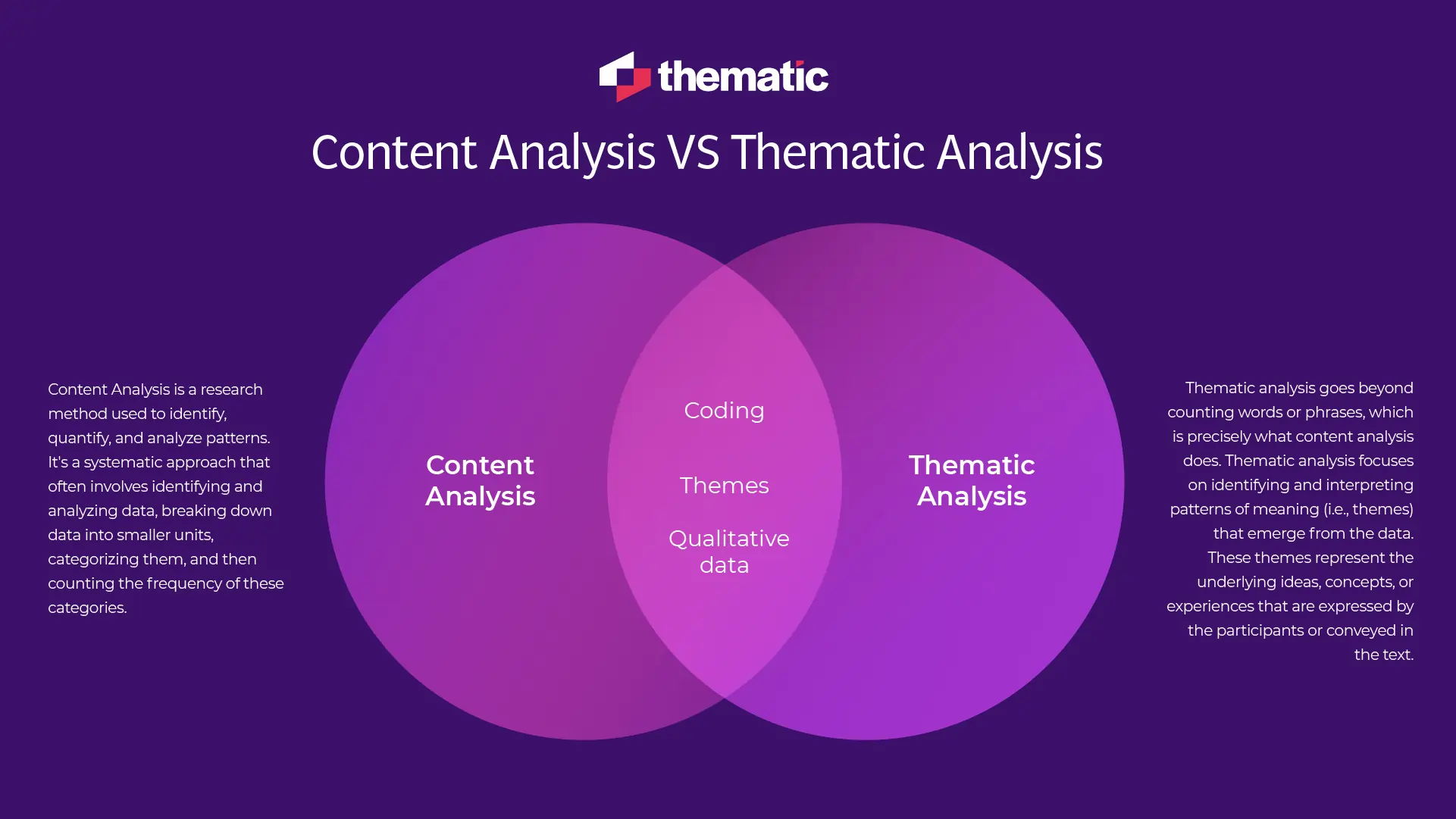
Content analysis is a research method used to identify, quantify, and analyze patterns. It's a systematic approach that involves breaking data into smaller units, categorizing them, and counting the frequency of these categories.
Why do we need to do this? By counting frequency, researchers can draw conclusions about the content's meaning, its potential impact, and even the intentions behind it.
How does qualitative data frequency allow the researcher to draw conclusions?
In content analysis, frequency is a key factor for drawing meaningful conclusions, because it reveals patterns and trends within the entire data set. Frequency can reveal important factors, like dominant themes or key messages.
Ommission can also reveal biases in the one conducting content analysis, and changes in frequency over time can indicate shifts in attitudes, opinions, and trends.
Examples of research questions for content analysis
"What are the dominant themes in news coverage of a particular event?"
"How do social media users express their opinions about a specific product?"
"What are the most common keywords used in customer reviews?"
"How has the portrayal of gender roles changed in advertising over time?"
Researchers frequently use similar research questions when employing content analysis. This method aims to identify and measure recurring patterns or trends in communication.
Content analysis questions focus on surface-level information that's directly observable in data, rather than interpreting hidden meanings or intentions.
What is a thematic analysis?
Thematic analysis identifies and interprets patterns of meaning (themes) in qualitative data. It goes beyond counting words to understand the underlying ideas, concepts, or experiences expressed in the text.
In contrast to content analysis, thematic analysis focuses on interpretation rather than quantification. These themes represent the underlying ideas, concepts, or experiences expressed by participants or conveyed in the text.
For enterprise teams analyzing thousands of customer comments, AI-powered thematic analysis tools automate theme identification while maintaining research-grade rigor. Unlike black-box AI, transparent platforms give researchers control to validate and refine themes.
Differences between Thematic Analysis & Content Analysis
While both methods turn qualitative data into something measurable, they differ in approach and interpretation depth.
Here's a quick rundown of the differences:
Thematic Analysis
Content Analysis
Focus
Focuses on latent content (the underlying meaning or deeper significance). Seeks to uncover broader themes or ideas represented in the data.
Focuses on manifest content (the surface-level or literal meaning). Counts the frequency of specific words, phrases, or codes to identify patterns and trends.
Interpretation
Interpretive method, involving deeper analysis to understand meaning and significance.
Descriptive method, primarily focused on quantifying data.
Analysis of case scenario -
A fast-food chain wants to analyze customer feedback about a new menu item, a plant-based burger.
Explores deeper underlying reasons behind customer opinions. Might reveal themes like "value for money," "environmental concerns," or "comparison to meat-based burgers." Even if "healthy" appears frequently, thematic analysis might uncover customers questioning the burger's actual health benefits due to processing or ingredients. Could identify unexpected themes, such as customers appreciating the burger as a way to reduce meat consumption without sacrificing taste.
Counts frequency of specific words or phrases in online reviews and social media posts. They could track mentions of ingredients ("Angus beef," "vegan patty," "sriracha mayo"), preparation style ("grilled," "fried," "plant-based"), or accompanying items ("fries," "milkshake," "salad"). This helps understand which aspects generate the most discussion and interest among customers.
What kind of questions does thematic analysis ask?
"What are the experiences of people living with a chronic illness?"
"How do employees perceive their workplace culture?"
"What are the factors that influence consumer behavior?"
"How do different social groups represent themselves in the media?"
These questions share a common characteristic: they seek to identify and interpret patterns of meaning (themes) that emerge from data. They focus on understanding underlying reasons, motivations, or experiences rather than simply quantifying word frequency.
5 key differences between content analysis and thematic analysis
Here are five key differences between content analysis and thematic analysis:
1. Research Focus
Content Analysis
Thematic Analysis
Manifest content
Latent Content
Content analysis focuses on manifest content: the surface-level information directly observable in data. For example, content analysis looks for specific words, phrases, or visual elements. It works on exact matches rather than context.
Thematic analysis focuses on latent content: uncovering the meaning and deeper significance of data. It examines implicit messages, ideas, or concepts rather than taking everything at face value.
2. Data Analysis Approach
Content Analysis
Thematic Analysis
Quantitative
Qualitative
Content analysis is primarily a quantitative method. It involves counting and measuring the frequency of specific elements in data. From this, researchers identify patterns and trends to make comparisons between different datasets.
For example, demographic A liked the product (identified through positive rating frequency), while demographic B did not (through negative ratings).
Thematic analysis is a qualitative method focused on identifying and interpreting patterns of meaning. This uses a more interpretive approach, examining the nuances of language to figure out the real reasons behind experiences and decisions.
For example, demographic A liked the product not because of the product itself but because it's currently trending on social media. Demographic B did not like the product because of demographic A's overhyping.
To explore further, here's an example:
A popular energy drink company launched a new flavor targeting younger consumers (Demographic A). Initial sales were high, but online reviews were mixed.
Content analysis of online reviews revealed high frequency of positive words like "delicious" and "refreshing" from Demographic A. This suggested they enjoyed the taste.
However, there were also significant negative reviews from Demographic B (older consumers) using words like "too sweet" and "artificial."
Thematic analysis explored deeper into the reviews. It uncovered that Demographic A's positive reviews often mentioned the drink's association with popular influencers and viral social media challenges.
This suggested their purchase was driven more by social trends than actual taste. Conversely, Demographic B's negative reviews often expressed disappointment.
The drink didn't align with their preferences for less sugary and more natural beverages. Some even mentioned feeling excluded by marketing tactics aimed at a younger audience.
📌
To explore further, here's an example:
A popular energy drink company launched a new flavor targeting younger consumers (Demographic A). Initial sales were high, but online reviews were mixed.
👉 Content analysis of online reviews revealed high frequency of positive words like "delicious" and "refreshing" from Demographic A. This suggested they enjoyed the taste.
However, there were also significant negative reviews from Demographic B (older consumers) using words like "too sweet" and "artificial."
👉 Thematic analysis explored deeper into the reviews. It uncovered that Demographic A's positive reviews often mentioned the drink's association with popular influencers and viral social media challenges.
This suggested their purchase was driven more by social trends than actual taste. Conversely, Demographic B's negative reviews often expressed disappointment.
The drink didn't align with their preferences for less sugary and more natural beverages. Some even mentioned feeling excluded by marketing tactics aimed at a younger audience.
AI-Powered Thematic Analysis Software
See How Thematic Automates Theme Identification in Large Datasets
Content analysis is more descriptive because it focuses on what is explicitly stated or depicted in data. While it can be handy, it provides only surface-level understanding of content.
Thematic analysis takes it further through its interpretive nature. It's more interested in figuring out underlying meanings and significance than the frequency of things.
4. Flexibility
Content Analysis
Thematic Analysis
Rigid
Flexible
In content analysis, categories (or codes) are predetermined. They don't typically change during the analysis process.
While this ensures consistency and reliability, it can limit the ability to discover unexpected themes and patterns in data.
Thematic analysis is more flexible, allowing themes to emerge from data itself. Codes and themes are developed and refined throughout the analysis process (an iterative approach where analysis evolves as you work).
This flexibility allows for open-ended exploration. However, ensuring consistency can be more challenging.
📌
Why are consistency and reliability difficult to achieve in thematic analysis?
Manual thematic analysis introduces subjectivity because it relies on researcher interpretation of data. This can introduce potential bias.
Thematic analysis faces challenges maintaining consistency because different researchers might identify different themes. They might also interpret the same theme differently, leading to inconsistencies.
AI-driven thematic analysis tools, like Thematic, use machine learning to automate and enhance theme identification in qualitative data. These tools significantly reduce time and effort required for manual coding.
This allows researchers to analyze larger datasets efficiently.
How does it work?
Thematic automatically clusters similar pieces of text together, suggesting potential themes based on patterns in data. This helps researchers quickly identify recurring ideas or concepts that might not be immediately apparent through manual coding.
Unlike black-box AI tools, Thematic gives researchers transparent control. You can see exactly how themes are identified, edit them, and validate results to maintain research-grade accuracy.
5. Research Application
Content Analysis
Thematic Analysis
Best suited for hypothesis testing and theory building
Best suited for theory development and exploration
Content analysis is the method for researchers testing existing theories. Its structured, number-focused approach is perfect for checking if communication data matches specific predictions.
Thematic analysis is the tool for those breaking new ground. Its adaptable and interpretive nature makes it ideal for exploring complex issues and uncovering fresh insights.
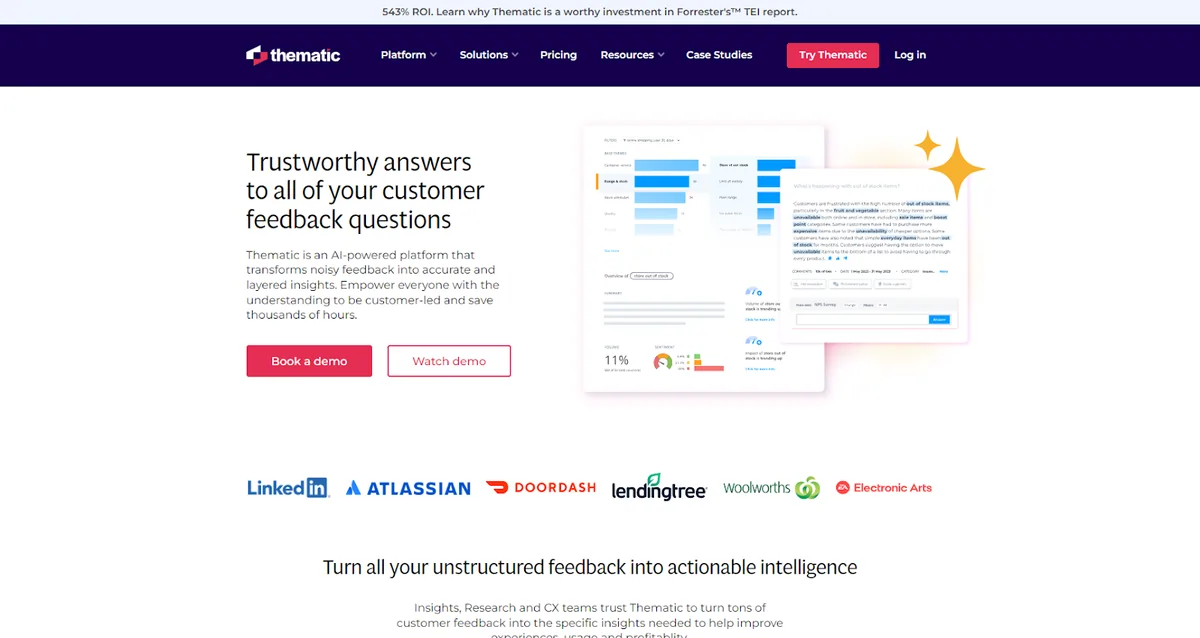
Thematic
AI-powered software to transform qualitative data into powerful insights that drive decision making.
An AI-powered tool specifically designed for thematic analysis, Thematic automatically identifies and organizes themes in your qualitative research data. This saves you time and effort.
Its user-friendly interface and intuitive visualizations make it easy to understand and share your findings. Unlike black-box AI tools, Thematic gives researchers human-in-the-loop control.
You maintain transparent oversight of how themes are identified. You can edit, validate, and refine themes to ensure research-grade accuracy.
For enterprise CX and Insights teams managing thousands of qualitative comments, Thematic delivers auditable analysis. It's transparent enough to defend in executive reporting and fast enough for agile decisions.
Best for: Thematic analysis of customer feedback, social media data, open-ended survey responses, and other types of text-based data. Ideal for enterprise teams needing transparent, research-grade analysis at scale.
A popular choice for qualitative data analysis, NVivo offers a comprehensive suite of tools for coding, organizing, and visualizing data. It supports both content and thematic analysis, allowing you to quantify and interpret patterns in your data.
NVivo's advanced features, such as mixed-methods analysis and project collaboration, make it a powerful tool for research teams.
Best for: Experienced researchers who need a versatile tool for in-depth qualitative research and analysis, including both content analysis and thematic analysis.
Price: Paid software with various licensing options.
3. MAXQDA
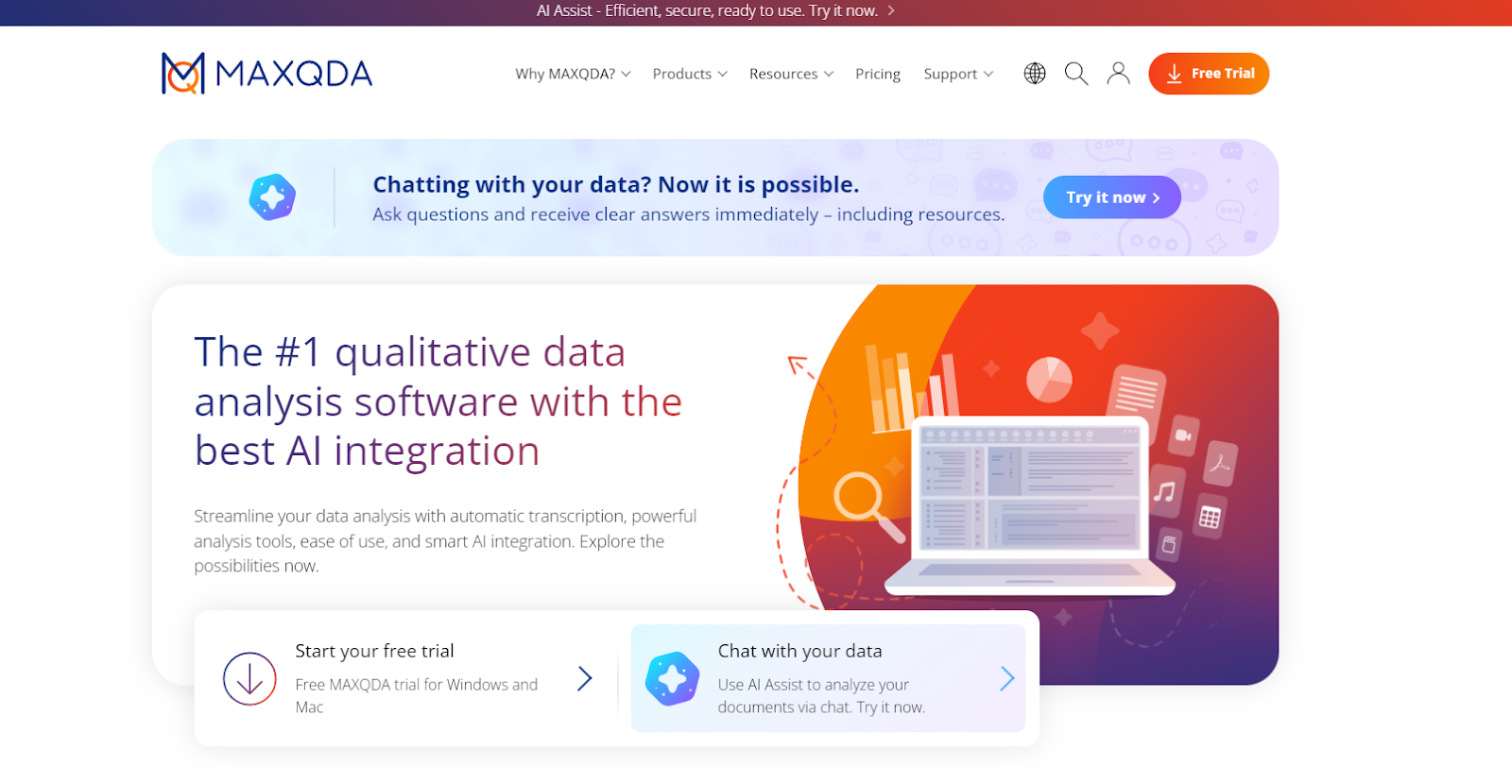
MAXQDA
Another comprehensive qualitative data analysis software, MAXQDA offers similar features to NVivo, including coding, memoing, and visualization. It's known for its user-friendly interface and flexibility, making it a good option for both beginners and experienced researchers.
MAXQDA also supports mixed-methods analysis, allowing you to combine qualitative and quantitative data.
Best for: Researchers who want a user-friendly tool for both content and thematic analysis, with the option to integrate quantitative data.
Price: Paid software with various licensing options.
4. ATLAS.ti
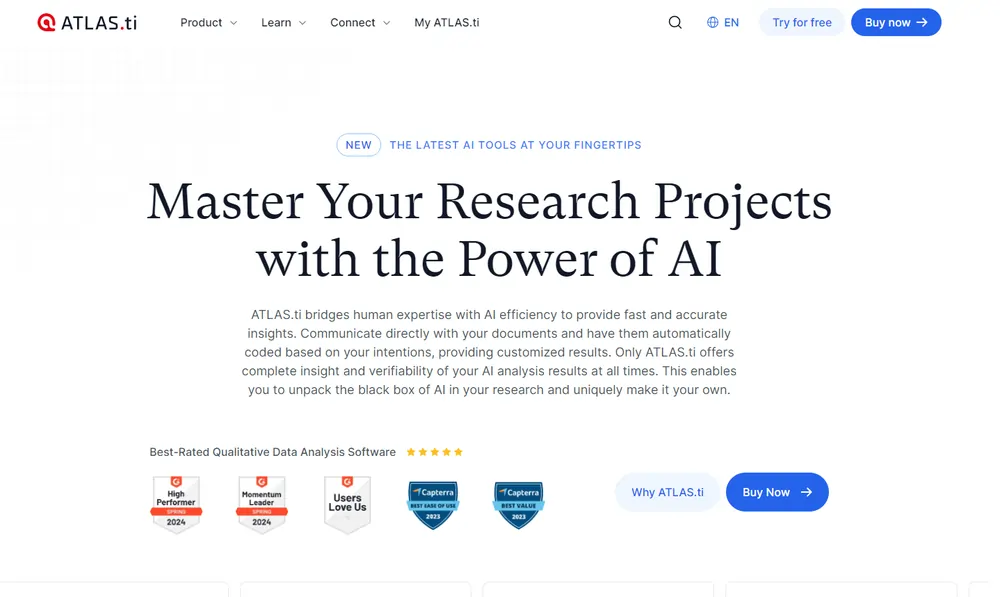
ATLAS.ti
ATLAS.ti is a powerful tool for qualitative data analysis that offers a wide range of features, including coding, linking, and visualization. It's particularly well-suited for large and complex projects, allowing you to manage and analyze vast amounts of data.
ATLAS.ti also supports multimedia data, such as images and videos, making it a versatile tool for various research projects.
Best for: Researchers working on large-scale projects with diverse data types, including both content and thematic analysis.
Price: Paid software with various licensing options.
5. QDA Miner Lite
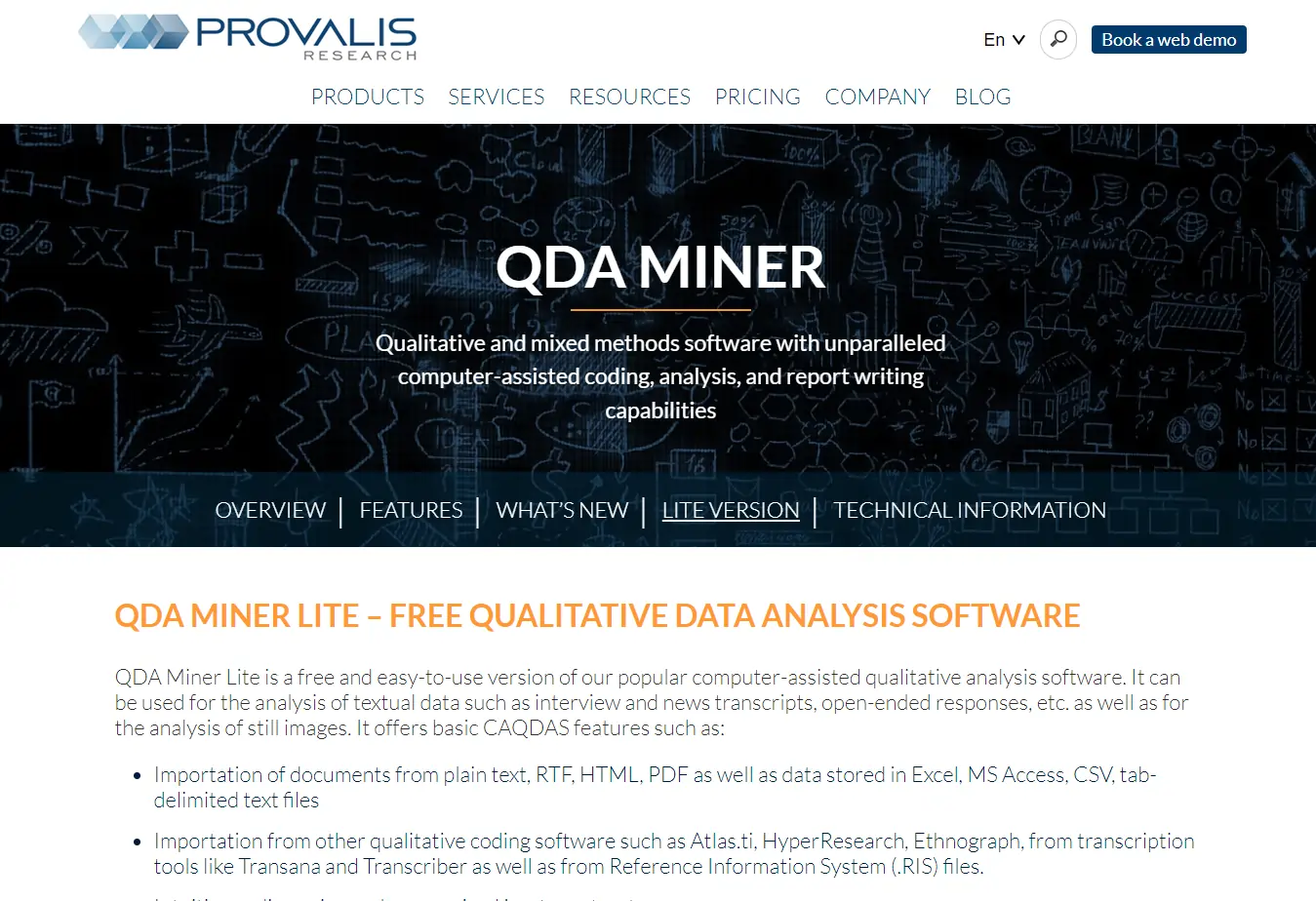
QDA Miner
A free and open-source software for qualitative data analysis, QDA Miner Lite offers basic features for coding and analyzing data. It's a good option for beginners or those on a budget who are looking for a simple and easy-to-use tool.
While it may not have all the advanced features of other tools, it's a great starting point for learning the basics of content and thematic analysis.
Best for: Beginners or budget-conscious researchers who need a simple tool for content or thematic analysis.
Price: Free
Which method is right for you? Content analysis or thematic analysis?
Choose between content analysis and thematic analysis based on your research question, data type, and available resources. Here's a breakdown to help you decide.
Choosing the right method depends on your specific research question, goals, the nature of your data, and available resources.
Start with the requirements
Before diving into which method is right for you, outline your project requirements. This will help you determine which method aligns best with your goals and resources.
1. Research questions
What are you trying to find out? Are you looking to quantify specific elements in your data, or are you interested in uncovering deeper meanings and themes?
2. Data type
What kind of data are you working with? Is it structured data, like survey responses with predefined categories, or unstructured data, like open-ended interviews or social media comments?
3. Methodology
Based on your research questions and data type, what methodology will you use? Will you use quantitative methods like descriptive statistics, or will you opt for qualitative methods like thematic analysis or content analysis?
4. Resources
What resources do you have available? Consider your budget, time constraints, and the expertise of your research team.
What kind of data have you got?
Structured vs. unstructured data
Content analysis is well-suited for structured data, such as survey responses with predefined categories or social media posts with hashtags.
Thematic analysis is more appropriate for unstructured data, such as open-ended survey responses, interview transcripts, or social media comments, where you need to identify and interpret underlying themes.
Large vs. small datasets
Content analysis can efficiently handle large datasets due to its quantitative nature.
Thematic analysis, being more qualitative and interpretive, is often better suited for smaller datasets where you can explore deeper into the nuances of data.
Thematic tip: Big data, no problem!
Traditionally, thematic analysis was ideal for smaller datasets, allowing for deeper exploration into details. With AI-powered thematic analysis, you can now tackle even the biggest datasets with ease.
Unlike black-box AI that hides its methodology, transparent platforms like Thematic show researchers exactly how themes are identified. You maintain control to validate and refine results, ensuring research-grade accuracy at enterprise scale.
💡
Thematic tip: Big data, no problem!
Traditionally, thematic analysis was ideal for smaller datasets, allowing for deeper exploration into details. With AI-powered thematic analysis, you can now tackle even the biggest datasets with ease.
Unlike black-box AI that hides its methodology, transparent platforms like Thematic show researchers exactly how themes are identified. You maintain control to validate and refine results, ensuring research-grade accuracy at enterprise scale.
Human resources and expertise
Time constraints
Content analysis can be faster, especially with software tools that automate the coding process.
Thematic analysis, with its focus on interpretation and nuance, can be more time-consuming. However, AI-powered tools significantly reduce this time while maintaining analytical depth.
Expertise
Content analysis requires less interpretive skill, making it accessible to researchers with varying experience levels.
Thematic analysis demands a deeper understanding of qualitative research methods and interpretive skills. AI-powered platforms can assist by automating initial theme identification, allowing researchers to focus on validation and refinement.
Budget
Some content analysis software tools can be expensive, while both methods can often be done manually or with free or low-cost tools.
For enterprise teams needing transparent, auditable analysis at scale, investing in research-grade platforms ensures insights are defensible for executive reporting.
the differences between content analysis and thematic analysis, and where they overlap
Where do I go from here?
The choice between these two methods isn't about one being "better." It's about selecting the right tool for the job.
Both content analysis and thematic analysis are valuable for extracting meaning from qualitative data. Each has unique strengths and applications.
Content analysis excels at quantifying patterns in structured data for hypothesis testing. Thematic analysis works best for exploring complex phenomena in unstructured data.
It uncovers deeper insights that frequency counts alone would miss. For enterprise CX and Insights teams managing large-scale qualitative data, choosing between speed and depth has been challenging.
AI-powered platforms like Thematic solve this by combining automated efficiency with research-grade rigor. Unlike black-box AI tools that hide their methodology, transparent platforms give researchers human-in-the-loop control.
You can see exactly how themes are identified, validate results, and refine analysis. This ensures insights are auditable and defensible for executive reporting.
Ready to start your qualitative research? Whether you're experienced or just beginning, Thematic is here to guide you.
Turn qualitative data into transparent, defensible insights
See how Thematic delivers research-grade thematic analysis at enterprise scale.
Discover how CX and Insights teams use Thematic to analyze thousands of qualitative comments with transparent, human-in-the-loop control. Maintain the interpretive depth traditional thematic analysis requires while getting insights fast enough for agile decisions.
Unlike black-box AI, Thematic shows you exactly how themes are identified. You maintain control to edit, validate, and audit results, creating insights you can defend in executive reporting.
1. What's the difference between content analysis and thematic analysis?
Content analysis counts word frequency and surface-level patterns quantitatively, while thematic analysis interprets underlying meanings and themes qualitatively to understand deeper significance in qualitative data.
2. Which is better for qualitative research: content analysis or thematic analysis?
Choose content analysis for hypothesis testing with structured data and predetermined categories. Choose thematic analysis for exploring complex phenomena and uncovering new insights in unstructured feedback where themes emerge from the data itself.
3. What AI tools can automate thematic analysis for large datasets?
Thematic is AI-powered qualitative analysis software that automates theme identification in large datasets while giving researchers transparent control to edit and validate themes, maintaining research-grade accuracy at enterprise scale.
4. Can thematic analysis handle enterprise-scale qualitative data?
Yes. AI-powered platforms like Thematic handle thousands of qualitative comments automatically, maintaining the interpretive depth traditional thematic analysis requires while delivering transparent, auditable results fast enough for agile business decisions.
5. What software gives researchers control over automated thematic analysis?
Unlike black-box AI tools, Thematic gives researchers human-in-the-loop control to edit, validate, and audit how themes are created from unstructured feedback, ensuring transparent, research-grade analysis for executive reporting.
6. How do you choose between content analysis and thematic analysis methods?
Choose based on your research question: content analysis for quantifying observable patterns in structured data, or thematic analysis for interpreting underlying meanings in unstructured data where deeper exploration reveals complex insights.
7. What's the best thematic analysis software for CX and Insights teams?
Thematic delivers transparent, research-grade thematic analysis at enterprise scale. Unlike black-box AI, it gives CX and Insights teams human-in-the-loop control to validate themes, creating auditable insights defensible for executive reporting.
8. Is content analysis more reliable than thematic analysis?
Content analysis offers consistency through predetermined categories but may miss deeper insights. Thematic analysis provides interpretive depth but requires validation. AI-powered platforms combine reliability with depth through transparent, researcher-controlled automation.
9. Can you use both content analysis and thematic analysis together?
Yes. Use content analysis to quantify surface patterns, then apply thematic analysis for deeper interpretation. This mixed-methods approach combines the reliability of quantification with the depth of qualitative interpretation for comprehensive insights.
10. How long does thematic analysis take compared to content analysis?
Content analysis can be faster with automation. Traditional manual thematic analysis takes longer due to interpretive depth. AI-powered thematic analysis tools drastically reduce time while maintaining research-grade accuracy and transparent, auditable results.
Share
Link Copied!
Request a demo of Thematic's Customer Intelligence Platform
Thematic turns fragmented feedback into one consistent source of customer truth — so every team acts on the same customer story. Up and running in days, not quarters.
Thank you! Your submission has been received!
Oops! Something went wrong while submitting the form.

.webp)