Most churn is not a surprise. Customers tell you they are leaving long before they actually go, in the language of their support tickets, their survey verbatims, their app store reviews, and their call transcripts. The problem is that this warning lives in unstructured text, which is an estimated 80 to 90% of all enterprise data and the part most teams never systematically read. By the time churn shows up in a usage dashboard or a renewal report, the decision has usually already been made.
You predict customer churn from feedback by turning that text into two things a team can act on: the themes that drive dissatisfaction, and a score that tracks how churn risk is moving over time. Thematic does this by unifying feedback from every channel, surfacing the specific themes and sentiment shifts that precede cancellation, and generating a churn-propensity score from the words customers use, without waiting for the next survey cycle. Every score traces back to the raw comments behind it, so a team can see not just who is at risk but why.
This article covers what churn prediction from feedback actually means, what it requires, where most tools fall short, how Thematic approaches it, and what it looks like for real customers.
What "predicting churn from feedback" actually means
Predicting churn from feedback means using what customers say, not only what they do, to estimate the likelihood that they will leave. It is different from a classic churn model built on behavioral data such as logins, purchase frequency, or payment history.
The distinction matters because feedback is a leading indicator and behavior is often a lagging one:
- Sentiment shift is a change in tone across a customer's comments over time, from positive or neutral toward frustration or indifference.
- Theme concentration is a rising share of feedback about a specific pain point, such as pricing, reliability, or a broken workflow.
- Churn intentions are statements where customers directly signal they are considering leaving or comparing you to an alternative.
- Silent disengagement is the drop-off in engagement from a customer who used to complain and has now gone quiet.
A usage drop tells you a customer is already pulling away. A sentiment shift can tell you why, weeks earlier, while there is still time to intervene.
What churn prediction from feedback typically requires
Doing this well takes more than running sentiment analysis on a single survey. Four capabilities have to work together.
- Unified feedback. Churn signal is scattered across surveys, support tickets, reviews, call summaries, and social. A prediction built on one channel misses most of the picture. The feedback has to be brought into one place before it can be read consistently.
- Theme detection that holds up. The prediction is only as trustworthy as the categories underneath it. Themes need to emerge from the feedback itself and stay accurate as customers change how they talk, rather than being forced into a fixed taxonomy that drifts.
- Sentiment tracked over time. A single sentiment score is a snapshot. Prediction depends on the trend: is this customer, segment, or account getting more negative over time, and about what.
- A score you can trust and trace. The output has to be a metric a team can monitor and defend. That means every risk score links back to the exact comments that produced it, so an analyst or an executive can interrogate it.
Academic work backs the underlying premise. A 2020 study in the International Journal of Forecasting found that adding customers' textual feedback to a churn-prediction model measurably improves its predictive performance over structured data alone.
Where most tools fall short
Most tools that claim to predict churn from feedback stumble in the same places:
- They analyze one channel, usually survey responses, and ignore tickets, reviews, and calls where churn language is often blunter.
- They rely on a fixed taxonomy that slowly stops matching how customers actually talk, so emerging churn drivers get missed.
- They produce a sentiment score with no link to the underlying comments, so no one can see what is driving it or whether to believe it.
- They quote inflated accuracy numbers. Be skeptical of any vendor promising near-perfect churn prediction from text.
That last point deserves honesty. A University of Manchester study that built a churn model purely from 23,195 unstructured bank feedback interactions reached about 58% accuracy. (You can see how Thematic predicts churn in the next section.) Text alone is a real but modest signal. It becomes powerful when it is unified with structured data, tracked over time, and made traceable. That points to a useful demo-time test. Ask a vendor to show you the exact comments behind a churn score, not just the number.
How Thematic predicts churn from customer feedback
Thematic treats churn prediction as a feedback problem first and a modeling problem second. The approach has four parts.
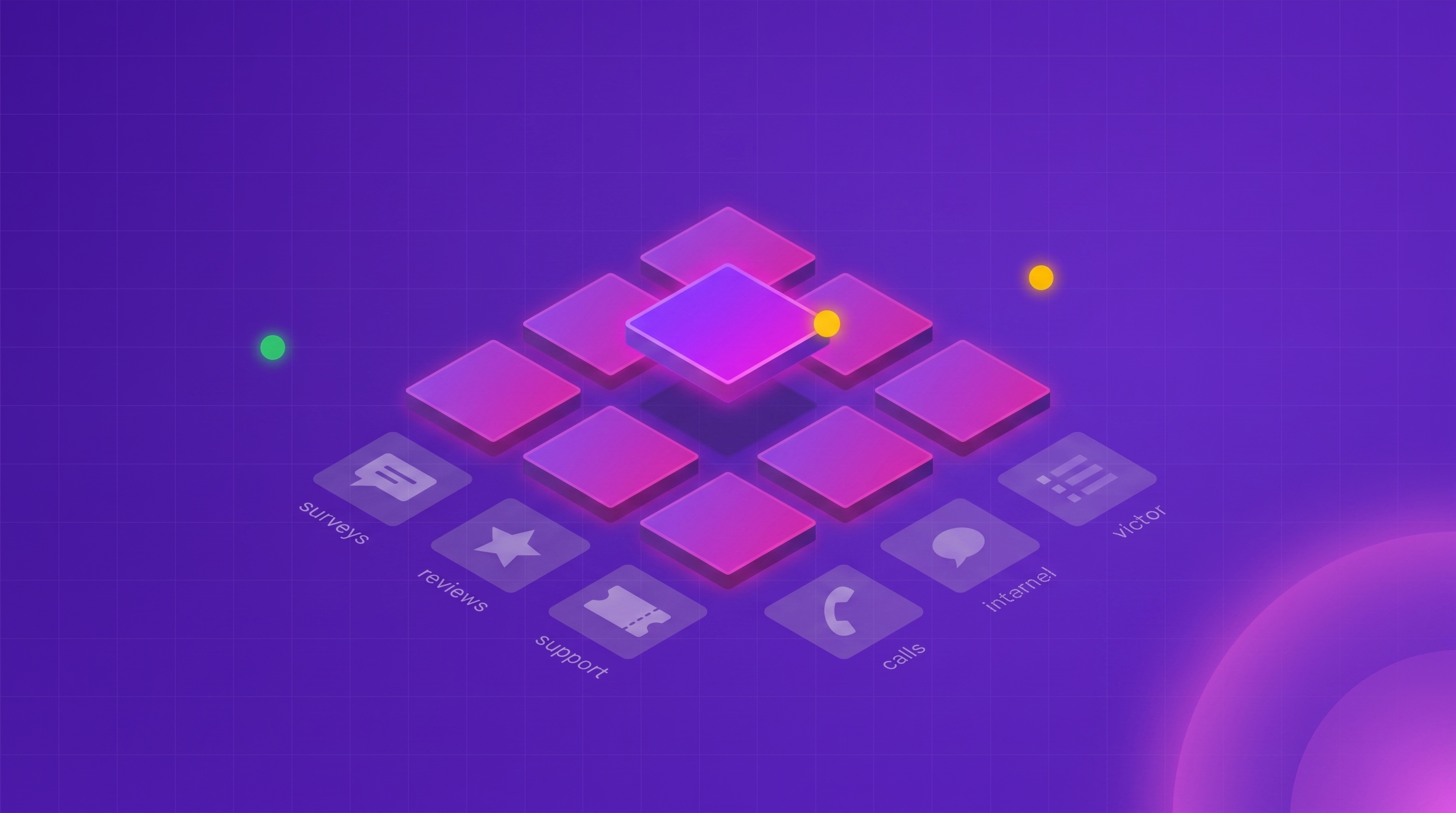
Unify every channel. Thematic brings survey verbatims, support tickets, app store reviews, call summaries, and social into one intelligence layer, so churn signal is read across the whole customer journey rather than one survey at a time.
Surface the themes that drive risk. Thematic discovers themes from the feedback itself and pairs each score movement with the themes moving it, so a team sees what is driving churn risk and not only that it is rising. This is what Thematic means by theme-level drivers.
Score churn propensity from text. Thematic's Scoring Agent generates predicted, or synthetic, scores such as churn propensity directly from unstructured feedback, without waiting for the next survey to run. A customer who never returns a survey can still carry a risk score built from what they wrote in a ticket or a review.
Keep it traceable. Every theme and every score in Thematic traces back to the raw comments behind it. When a churn-risk score rises, a team can read the specific verbatims that moved it, which is what makes the prediction defensible to a skeptical executive.
The economics make the case for doing this early. Bain research found that a 5% increase in customer retention can increase profits by 25% or more, and acquiring a new customer costs roughly 5 to 25 times more than keeping one. Catching a churn driver in feedback before it spreads is far cheaper than winning the customer back later.
What this looks like in practice
Atom Bank. The UK app-based digital bank unified feedback from seven channels across three product lines: App Store reviews, Trustpilot, support complaints, and call summaries. It rolled them into a single 0 to 100 Customer Goodwill score. By identifying the top three reasons customers were contacting the bank and acting on them, Atom Bank cut calls related to unaccepted mortgage requests by 69%, savings maturities by 43%, and device issues by 40%, alongside a 40% reduction in overall call center volume. Over the same period its customer base grew 110%. Those contact drivers are exactly the friction that precedes churn, surfaced from feedback and removed before it did damage.
A top-10 US homebuilder. In an industry where a poor experience ends a relationship and referrals drive revenue, one top-10 US homebuilder sustained a double-digit CSAT lift over three years by acting on the themes in its customer feedback rather than waiting for satisfaction to erode.
The mechanism is the same in both cases. Read the feedback across channels, find the themes that predict defection, and act while the customer is still deciding.
A buyer's checklist for predicting churn from feedback
Ask these questions before choosing a tool:
- Does it analyze all my feedback channels, or only surveys?
- Do themes emerge from the feedback, or am I locked into a fixed taxonomy?
- Can it track sentiment as a trend over time, not just as a single score?
- Can it produce a churn or risk score from text for customers who never fill out a survey?
- Can I click any risk score and read the exact comments behind it?
- Is the vendor honest about accuracy, or promising near-perfect prediction from text alone?
The short answer
You predict customer churn from feedback by unifying every channel, finding the themes and sentiment shifts that lead defection, and scoring churn propensity from the words customers use, with every score traceable to the raw comments. Thematic does this so teams can act on the warning while it still matters. The test to run today: pull your last quarter of churned customers, read what they told you before they left, and count how much of it you could have seen coming.